While Christmas is considered to be the most wonderful time of the year by many, including singer Andy Williams, it could also be a contender for the most wasteful. From trees to packaging to gifts, so much of our Christmas ends up in the bin.
How much is wasted?
Wrapping Christmas presents shows someone how much you care about them. You spend time picking the perfect paper, choose the ribbon, take time to make the bow, and pick out the tag. Gorgeous!
But what about all that wrapping paper?
We cut down approximately 50,000 trees to make Christmas wrapping paper, much of which is thrown away. In fact, we send over 5 million tonnes of wrapping paper to landfill each year, and 75% of this is Christmas paper. The amount of wrapping paper that we throw away could reach the moon, which is approximately 384,400 km away.
Wrapping paper does not just pollute when it is thrown away. Research has found that 1 kg of wrapping paper produces more than 3 kg of CO2 emissions when being made.
This paper is not the only problem. Christmas cards are also wasted, with approximately 1 billion thrown away. If one tree can make 3,000 Christmas cards, we would need 77 football fields to make cards for next year.
What we can do to help?
There are a few things that we can do to reduce waste this Christmas, such as:
- using reusable gift bags, boxes, or sacks;
- using other wrappings, including newspaper, maps, comics, or fabrics; and
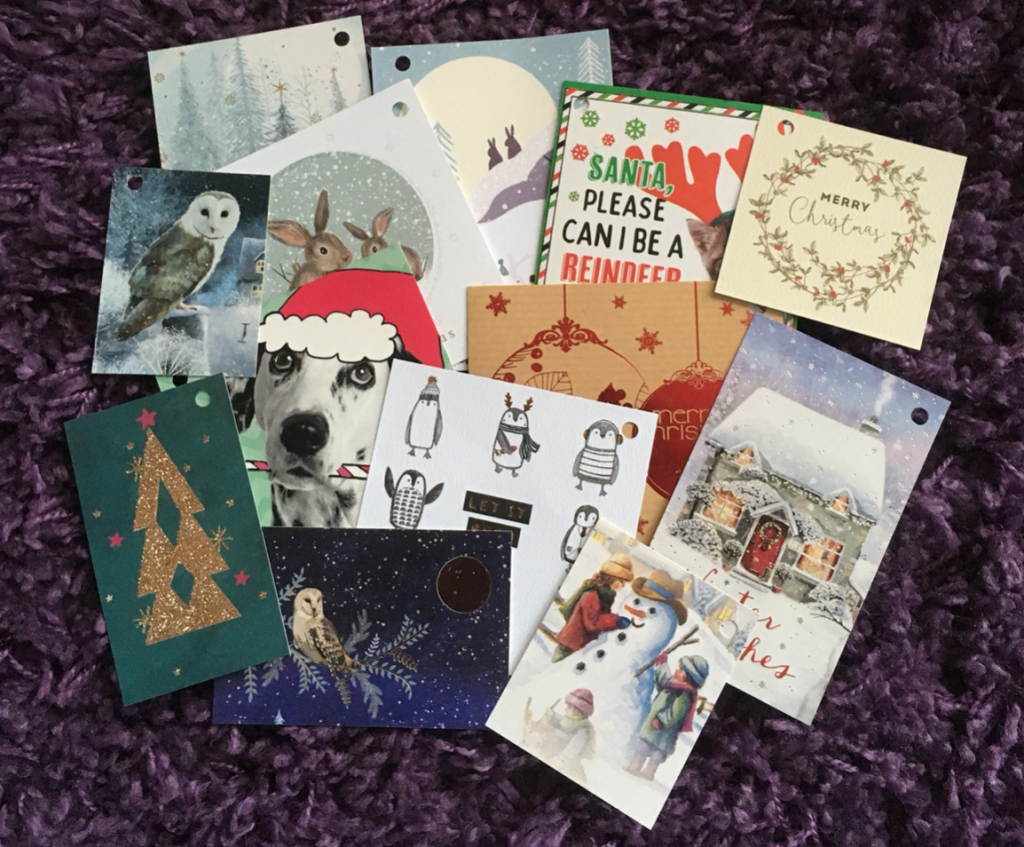
- reusing Christmas cards as gift tags by cutting out the design and using a hole punch to make a hole for the ribbon (and they look very professional).
If you are thinking of buying new wrapping paper, it is best to avoid paper with glitter or that is laminated. Unfortunately, these are not recyclable. Look for the FSC sign or make sure that it is made from 100% recycled wrapping paper. If you are careful when unwrapping your gifts, you can even reuse it next year.
Unfortunately, you can not choose what presents you are given are wrapped in. Before deciding what to do with your wrapping paper, do the scrunch test. If you scrunch the paper into the ball and it stays in a ball, you can recycle it. If it bounces back, you have to throw it away.