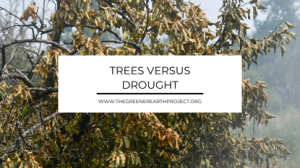
Experts believe that the Major Oak, also known as the Robin Hood tree, died in June 2026. It was about 1,200 years old when it died and is one of the biggest oak trees in Britain. Its circumference is about 11 metres, the sprawling canopy spreads to around 23 metres, and weighs 23 tonnes.
The legend
The legend
It became known as the Robin Hood tree because the outlaw allegedly used the tree’s hollow trunk as a hideout. The hollow was not caused by any malicious activity, but by fungi.
However, it was named ‘Major’ stuck after it was mentioned in a book published in 1790 by Major Hayman Rooke. He moved to the area after he left the British Army.
Why did it die?
Over the past few years, there had been a noticeable reduction in the quality and quantity of leaves. This year was the first spring where the tree had no leaves.
The Royal Society for the Protection of Birds (RSPB) owns Sherwood Forest, where the tree still stands. The RSPB believes that two of the reasons the tree died are well-intentioned structural intervention and tourism.
To preserve the Major Oak’s iconic shape, metal braces and props, concrete, and coverings were used. However, these stopped the tree from ageing naturally.
Leading soil experts and arboriculturists found that the soil was hard, compacted, and lacked life. Footfall around the tree compacted the soil, making it harder for rainwater to penetrate the soil. This reduced the amount of water and nutrients the tree got.
The compact soil meant that the root system was smaller and weaker than anticipated from earlier scans. The experts believe the poor soil, human intervention, and weakened roots were major contributors to the Major Oak’s decline.
However, heatwaves and draughts could have compounded the challenges the tree faced due to its age and popularity.
The RSPB worked with soil and tree experts to understand the tree’s condition and improve the soil around it. In June 2025, conservationists installed irrigation equipment to water the tree’s roots and help to protect it during heatwaves and draughts. Despite this, the tree still died.
What about the future?
Major Oak still stands in the ancient woodland of Sherwood Forest. It is just a 15 minute walk through the woods from the Sherwood Forest Visitor Centre. Visit it by going to:
Sherwood Visitor Centre and National Nature Reserve, Forest Corner, Edwinstowe, Nottinghamshire, NG21 9RN
The tree will continue to be a home to wildlife, even in its death, and its legacy will live on in the saplings that have come from cuttings and the acorns.
Want to plant your own?
It is not difficult to plant your own oak tree. Just follow these instructions:
- Collect acorns from mid-September to December, ensuring that they are green or brown and do not have holes in them. The caps should come off easily. To check the acorns are health, place them in a bowl of water. Healthy acorns will sink.
- Fill a 15 cm pot with multi-purpose compost, leaving a 2.5 cm gap between the compost and the top of the pot. The pot should have drainage holes.
- Make holes in the compost at the edge of the pot and put an acorn into each hole. Cover with compost.
- Water and place outside. You might have to protect the acorns from birds and animals with netting.
- The seedlings should be kept in the pot until roots come out of the drainage holes. Repot into larger pots. Tall pots are better than short ones.
- Repot as necessary.
- Keep watering over winter. The first leaves should appear in spring.
- Keep the saplings in pots for 2–3 years. By the second spring, it should be ready for you to plant, but you might have to wait for another year.