Trees are vital part of our society. They provide pollen for our bees, reduce illnesses associated with air pollution, and help with water management. Trees are becoming increasingly important to help to decrease the temperature.
However, these hot summers and droughts are causing our trees to become distressed.
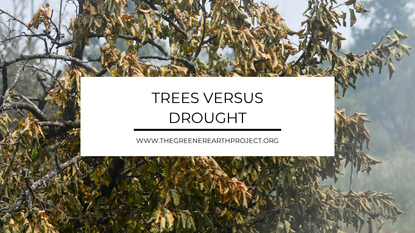
How to spot a tree with drought stress
There are several early warning signs that a tree has drought stress. While different species react differently, the common signs include:
- leaves wilting during the day but recovering at night;
- older leaves becoming yellow, brown, or faded;
- leaf edges curling;
- having brown blotches/edges or becoming brown between the veins; and
- leaves appearing brown and shrivelled or dropping prematurely.
If the drought continues, the distress will become more noticeable. The symptoms include:
- most leaves turning brown and becoming shrivelled;
- shoots or branches dying;
- the canopy thinning (due to fallen leaves and/or dead branches); and
- splits in the bark.
This might be distressing for you as well as the trees. However, there are certain things that we can do to reduce a tree’s stress during drought.
How to protect trees during drought
This might be distressing for you as well as the trees. However, there are certain things that we can do to reduce a tree’s stress during drought.
Planting
The best way to protect new trees is to plant them at the correct time. Trees should be planted in the autumn. They can often be bought as bare rooted, meaning they have no soil around the roots; however, cell grown trees can also be used.
By planting trees in the autumn will give them time to respond to the new site conditions. It gives trees the chance to develop roots in the winter, particularly if it is mild, meaning they will have deeper roots and a better chance of taking up water from the ground during the hot weather.
When planting trees, firm up the soil by pushing it down and ensuring that there are no cracks. Continue to do this in the hot weather when cracks appear. This will cover roots, protecting them from the sun, and reduce evaporation from the soil. Apply a mulch to add nutrients and suppress weeds
When planting trees in urban settings, consider installing water tubes or bags. They will reduce the amount of water runoff and ensure that the water reaches the roots. Then apply a mulch after the tree.
Weeding
Other plants around trees compete for water, particularly when a tree is young. Controlling the weeds around the tree during the growing season means that the tree will have more access to water.
Watering
While established trees can find their own water underground, young trees need to 50 litres of water a week during the summer months. It is recommended to give trees this amount of water in the summer for three years after planting.
Consider using sustainable water sources. These could include rainwater, harvested from water butts, or ‘grey’ water. Grey water is water from baths or washing up bowls.
If using grey water, use it within 24 hours of it being collected to minimise bacterial growth. There will be contaminants from things such as soap, but this is unlikely to cause problems when used in the short term. The soil can filter these contaminants.
Grey water should not be used on edible crops as there is a risk of contamination from pathogens in the water. Never use grey water from the dishwasher due to the salt.
When watering trees, consider how you water them.
- Water slowly so it does not run off. Use a rose attachment to slow down the water, allowing it time to permeate the hard ground.
- Do not just water around the base of the trunk. The roots match the canopy overhead, so watering under the whole canopy means that most roots will get some water.
Mulching
Mulching with organic matter is important as it helps to retain moisture. You can use homemade or shop-bought compost. Mulches are especially important when the tree is surrounded by bare earth, but will benefit all trees and encourage better growth. These benefits include:
- improving soil structure;
- decreasing soil erosion from downpours;
- reducing weeds by up to 50%;
- boosting soil diversity;
- providing a habitat for helpful soil creatures, such as worms, nematodes, and fungi; and
- providing food for beetles, birds, and hedgehogs.
You do not have you use compost. If you have grass cuttings, natural wool, or wood chips, you can use these. They can reduce water evaporation by approximately 35%, which is vital during droughts, and will keep the roots cooler.